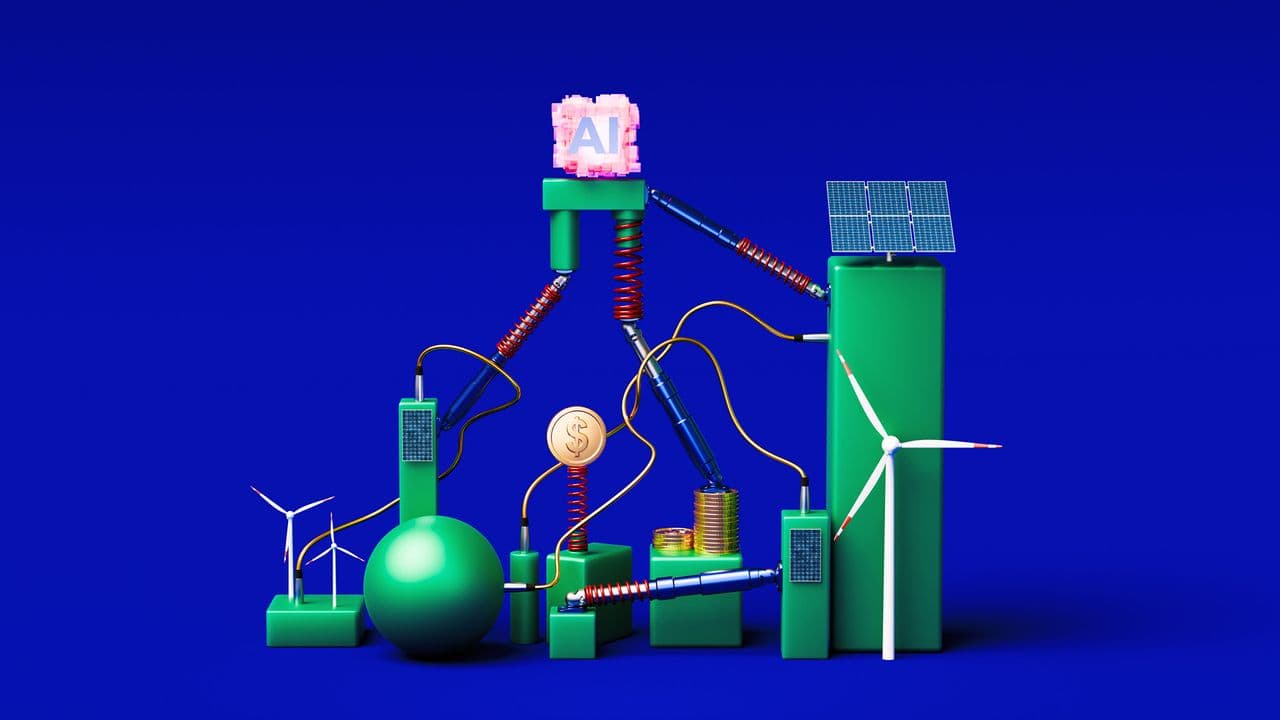
Scientists are exploring new algorithms, hardware and computing methods to lower AI's power demands. Strategic siting of datacenters and other steps to increase green energy use are also key.
Study warns AI datacenters are vulnerable to the climate hazards that their global greenhouse gas emissions bolster
Amid rising concern that the artificial intelligence boom is fueling the climate crisis, a new report has found that nearly 80% of datacenters are also exposed to extreme climate hazards, including flooding, extreme winds and wildfires.
Those impacts are leaving the infrastructure vulnerable to disrupted operations, increased time offline and inflated insurance and repair costs, the research from climate risk analytics firm First Street shows.
Continue reading...
Mercury 2's success could reshape AI infrastructure, prioritizing parallel processing and altering hardware value in real-time applications.
The post Inception Labs’ Mercury 2 outperforms Google’s DiffusionGemma in the race to replace autoregressive AI appeared first on Crypto Briefing.
Synology's NAS devices empower crypto users with self-custody and decentralized verification, highlighting the importance of secure, updated hardware.
The post Why crypto enthusiasts are paying attention to Synology’s top-rated NAS devices appeared first on Crypto Briefing.
OpenAI's strategic shift to hardware, led by Ha Thai, could redefine AI consumer interactions, intensifying competition with Meta.
The post OpenAI hires Ha Thai from Meta to lead device communications appeared first on Crypto Briefing.
In hardware, when you ship something broken, the consequences are severe and often irreversible. That’s the world I worked in for years, in verification roles at Mellanox and later at Alibaba. The stakes forced the industry to build a rigorous verification culture. You proved designs worked before they left the building.
In software, verification disciplines look like CI/CD pipelines, static analysis, canary deployments, and observability. But those systems were built around code written at human speed, with human comprehension baked into the process. AI code generation has broken that assumption. The writing process can no longer be trusted to carry institutional knowledge and judgment into the codebase. The industry is being pushed toward the kind of rigorous verification culture that hardware engineers have practiced for decades.
Enterprises are generating code faster than at any point in history. Google recently disclosed that 75% of the company’s new code is now AI-generated. Meta
Midjourney's expansion into hardware and medical imaging could diversify its market presence and drive innovation in healthcare technology.
The post Midjourney unveils first hardware product, an ultrasonic scanner appeared first on Crypto Briefing.
Nvidia's ENPIRE hands an entire robot fleet to coding agents like Codex and Claude Code, letting them write training code, test it on real hardware, and improve without a human watching.