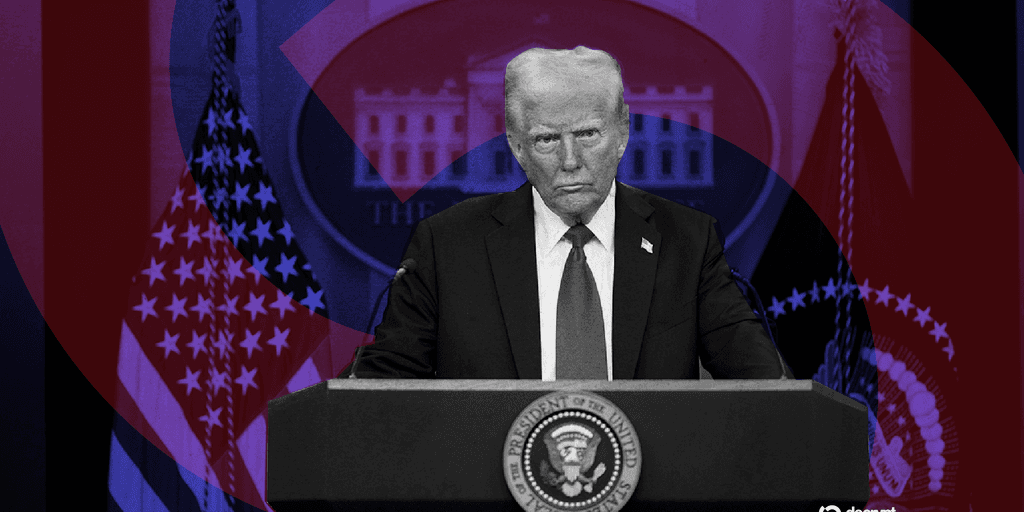
The senators said a plan allowing fiduciaries to offer exposure to riskier assets like crypto and private equity would hurt retirees and personally benefit President Trump.
Microsoft just kicked off Build 2026 with a keynote from CEO Satya Nadella and other company leaders. As expected, it was filled with announcements, ranging from new Surface hardware to an always-on personal assistant and updates across Microsoft's in-house AI models.
If you didn't watch the event live, you can catch up on all the latest news in the roundup below.
A mini Surface PC designed for AI development
The Surface RTX Spark Dev Box is geared toward developers who want to run local AI models on their device, serving as a substitute for Qualcomm's canceled dev kit. It comes equipped with Nvidia's new Arm-based Spark RTX chip and 128G …
Read the full story at The Verge.
President Donald Trump signed an executive order Tuesday creating a "voluntary framework" for AI companies to share their frontier models with the federal government before they're released "to promote secure innovation and strengthen the cybersecurity of critical infrastructure."
The order says the US AI industry has succeeded in part "because we refuse to stifle this innovation with overly burdensome regulation," but that it also recognizes new AI capabilities come with security risks. Accordingly, it directs several federal agencies to come up with a framework to "assess the advanced cyber capabilities of AI models" before they're releas …
Read the full story at The Verge.
President Donald Trump on Tuesday signed an executive order to enable leading AI developers to voluntarily submit their most capable models for government cybersecurity tests before releasing them to the public. The order was triggered by concerns over Anthropic's Mythos model, which the company refused to release due to its ability to expose vulnerabilities in computer systems.
After industry objections, President Trump signed a revised AI executive order requiring only voluntary prerelease government reviews of advanced models.
Under new rules, tech companies will be asked to share AI models with government for review before public release
Donald Trump signed an executive order to create a voluntary framework for the federal government to vet powerful new AI models before they are released. Tuesday’s highly anticipated order represents an attempt by the president to tighten his grip on cybersecurity and national security threats posed by AI, tacking against his earlier deregulatory stance.
Under the new rules, tech companies would be asked to share their AI models with the government for a voluntary review, up to 30 days before a public release. The Trump administration says doing so will allow them to improve national security, particularly with regards to cybersecurity.
Continue reading...
Most enterprises already have access to AI models, so that is no longer the differentiator. The real challenge begins after the demo ends. Organizations are now trying to determine how AI agents interact with ERP systems, supply chains, approvals, security policies, customer records, and operational environments that were never designed for autonomous systems. The reality is that ERP remains the system of record for many business decisions. If AI agents cannot operate within ERP governance, approval, and transaction frameworks, they remain assistants rather than operational participants.
What makes this interesting is that Snowflake is not positioning itself as another AI platform vendor. The company is positioning itself to be the governance and orchestration layer that enterprises will build agentic AI around. Horizon Context, Semantic Studio, Cortex Sense, Coco, Cowork, Apache Iceberg interoperability, Model Context Protocol (MCP) connectivity, and the company’s broader AI security